As a long-time Game Master, I’ve always felt that the holy grail for my personal set of skills was the marriage of a completely free-form, aim-less hex crawl with the intentional, arc-building and tension-rising story type of play.
There is probably some “dungeon-tuber” out there with some strong opinions on that, claiming to have years and years worth of RPG-play to prove their point (spoiler: they haven’t, they’ve probably read some RPG books, at best.). Some old grognard will tell me how this is cheating the principles of old-school-play yadda yadda yadda. I’ve long fallen out of any RPG or OSR-related discourse. System-matters discussions is the last thing I remember. None of it matters.
What matters is that my players have a grand time, and we create fond and fun memories of our collective hallucinations in fictional fantasy realms.
Now I know from my own group of friends, for whom I’ve been their forever-GM that they love big, epic stories, slowly unfolding, over months, years even – with surprising twists and turns, a large set of returning NPCs, where some become hated and some loved protagonists in this big, unfolding story. They don’t need to play super-heroes, are fine with character death, but also like to imagine their PCs at the center of world-shifting events. I mean, it’s an escapist hobby, so who doesn’t like to imagine that.
We have concluded a 6-year long campaign recently, which was very story-focused, very scene-by-scene based and driven by complex, intermingled plot-lines, but at the end of the day, a limitation in choice. The campaign could have ended in one of approximately seven ways, and my players decided in the end for one outcome. It was immensely satisfying concluding their individual and collective story arcs and writing an epilogue for the stories of their respective characters.
After such a style of play, we switched to something that could be described as the polar opposite. We started playing Dolmenwood this year. Hex-crawl in it’s purest form. I pushed them into this world, with little to no guidance. Only hints about the bigger picture, the factions and their conflicts, etc. – all to be discovered, through random play, rumours and all the other tropes.
Now from experience, I know that the collective end of the ADHD-spectrum of my playgroup will never uncover all the underlying themes, conflicts, mysteries and factions within this wood full of Dolmen by pure chance, even though they would love to. But the dynamic of play is just too much a meet-up of five late-30s / early 40s guys being silly for 3 hours straight and being unable to stop giggling, doing voices of their whimsical characters and thinking of the craziest shit they could possibly do to derail the homeopathic hint of a GM-plan.
To let the PCs participate in great story arcs within a hex crawl setting, a GM does not need a rumor table, but really interesting and compelling NPCs. Characters, that will fascinate the players for months and years and attract them through their presence to places and plot points they might otherwise miss.
Enter stage: the “Glue-NPC”. Yes, this is my very own original name, and if you came up with it before me, then fuck you. Admittedly, I’ve stolen the concept from another famous hex crawl system of recent memory, “Forbidden Lands”, even though it’s not formalised in these books, but it’s an implicit concept within the campaign “Ravens Purge”.
So what do I call a “Glue-NPC”? In Forbidden Lands it’s an NPC called “Merigall”, and it turns out they are a shapeshifting trickster of unknown origin (at least at the early stages of playing Forbidden Lands). If a campaign lasts long enough PCs would eventually find out Merigall’s history and motivations. But the true, meta-purpose of this character is to interject itself in regular intervals, in different shapes (sometimes as an old man by the fire, sometimes as a woman, sometimes as a child, an animal) and through encounters with the PCs slowly build up a relationship with them that eventually can make Merigall a) an unreliable narrator for the players and b) a shady quest giver and c) a gatekeeper of secrets slowly unfolding. Even though, it turns out, the players might enter into a deal with the devil. But the NPC will keep them glued to the larger narrative that is hidden amongst all those hexes or rumor tables.
Merigall’s shapeshifting abilities also reveal themselves through piercing, yellow eyes – each form they take is characterised by these piercing yellow eyes, and soon characters would piece one and one together and realise they are interacting with the same type of being or literally the same person in different forms. When played well, this relationship with Merigall becomes an uneasy alliance that eventually can thrust characters into the epicenter of the conflict within the Forbidden Lands and towards some climactic battle – if they wish to pursue it of course.
In a sandbox type game it always remains the player’s choice, if they will follow such narrative threads or breadcrumbs. But offering them that as a GM is an easy (and honestly also fun) way to do it. I like to play the strange old wizard, the annoying goblin, the ambiguous trickster – I as the GM don’t want to just play the referee between “the world” and my players.
So, in Dolmenwood I have literally started the campaign in Session 1 by throwing my Glue-NPC at the characters. After 15 minutes of play a Grimalkin introduced himself, shapeshifting from a cat sleeping on a windowsill in the obligatory tavern where they met, and putting the characters before a tricky choice of following the opening adventure for their own purpose, or if they would return the treasure to my trickster-ish cat shapeshifter for a big pile of Gold. If they do, fine – if they don’t, also fine. He will show up in the future, and tempt them or try to influence them to do his bidding. Maybe in other shapes or forms. What are his true intentions? Whom does he work for? No one knows. But if they players take the bait, it will glue them to an epic, unfolding, high-stakes narrative across the 200+ hexes they can visit in this whimsical and magical forest.
It just so happens that this shapeshifting Grimalkin from a distant fae kingdom is called “Merigall Mousetrap” and has piercing, yellow eyes. I know, how original. But it’s my game, and I can steal from any other RPG book I want.
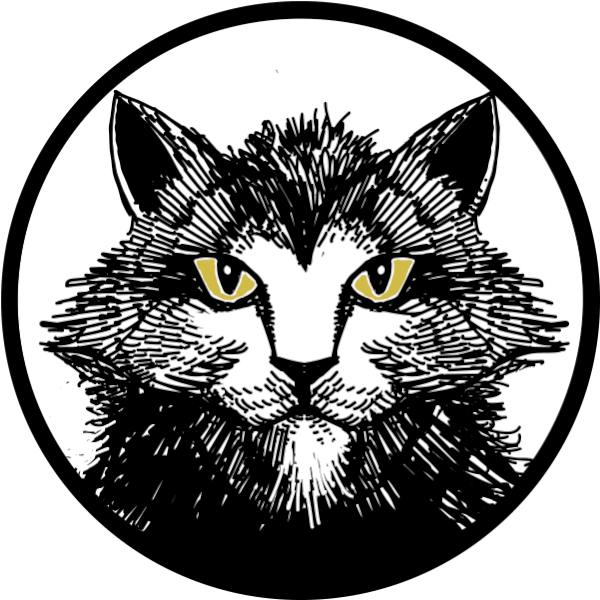
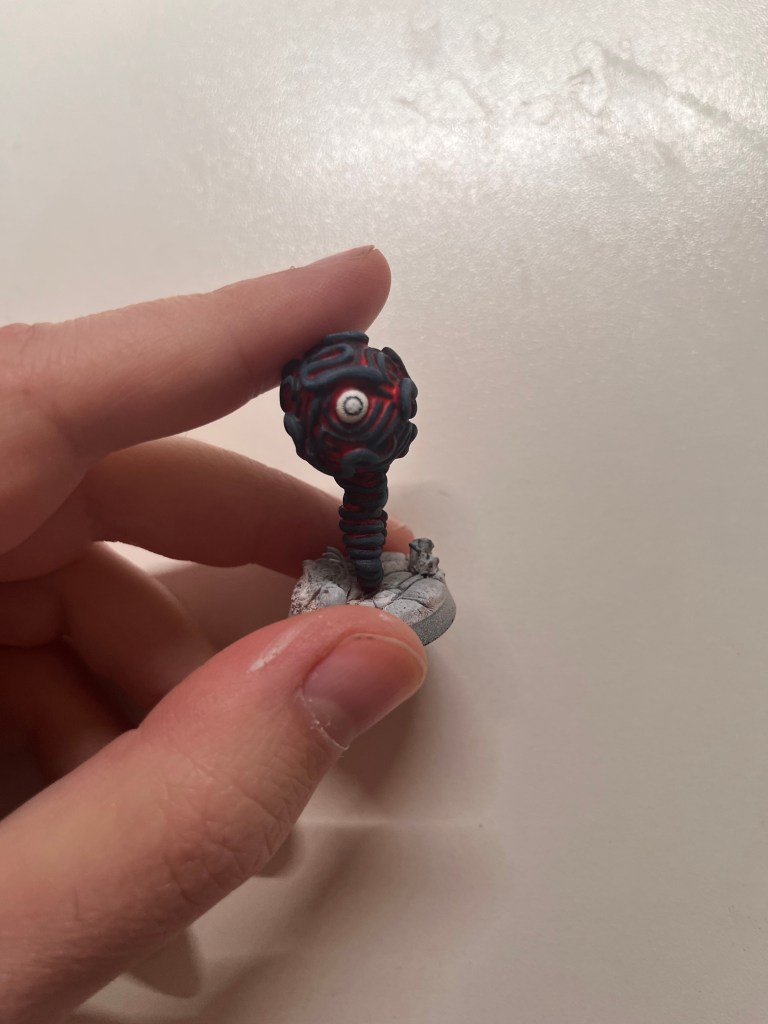
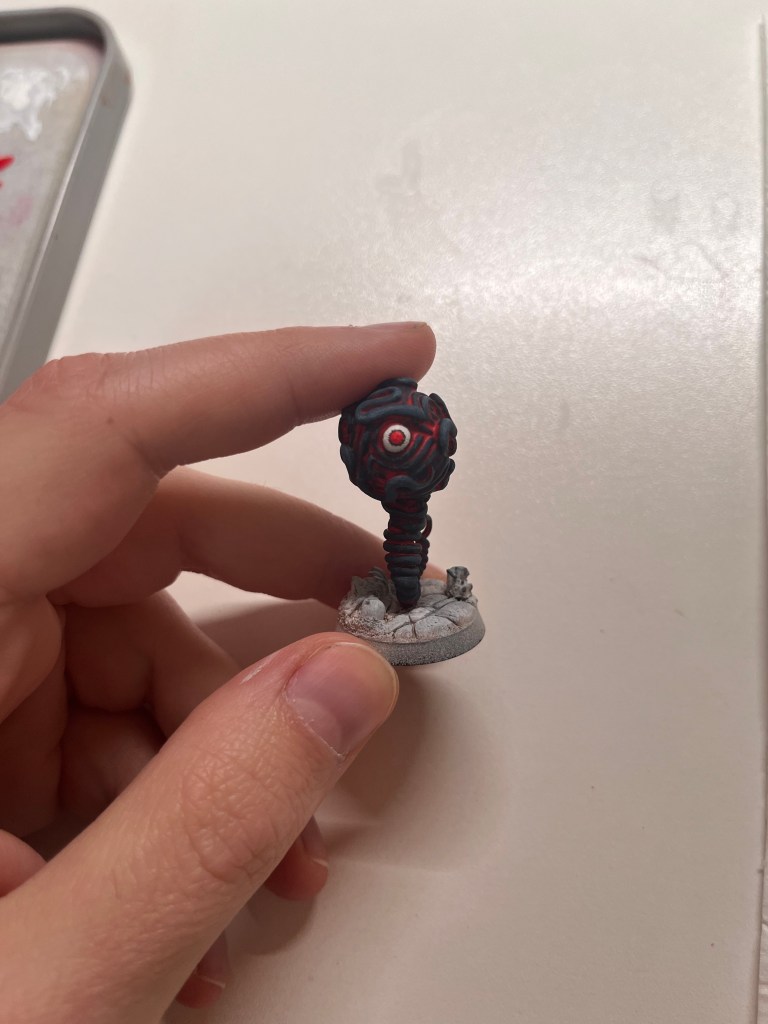
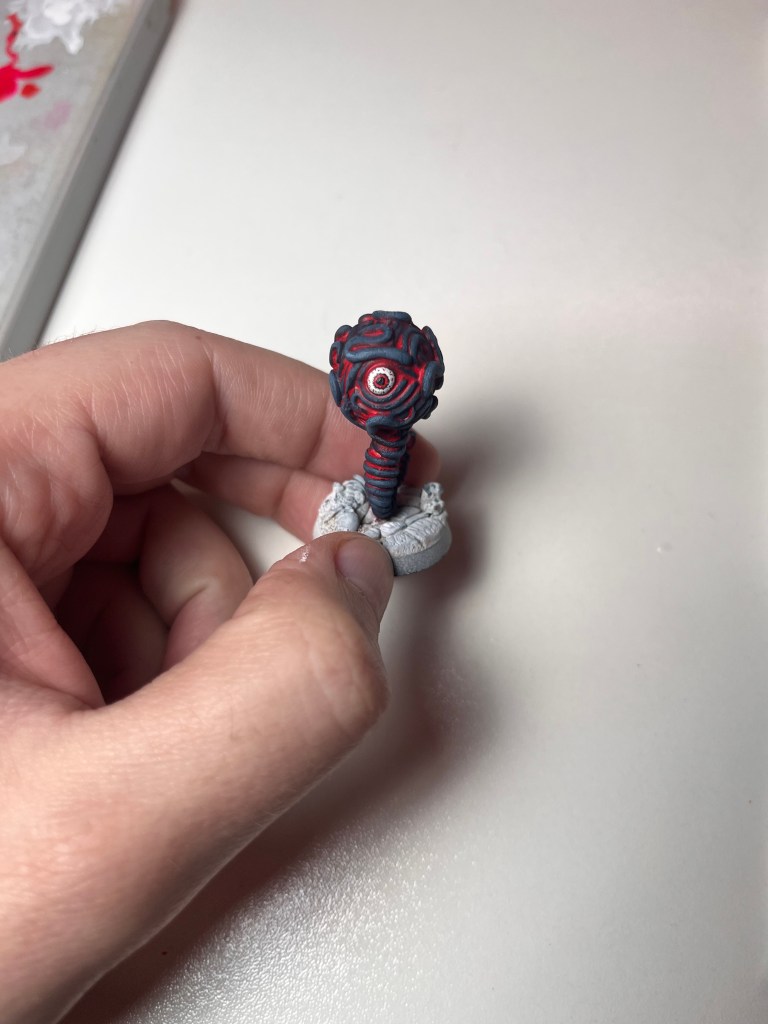
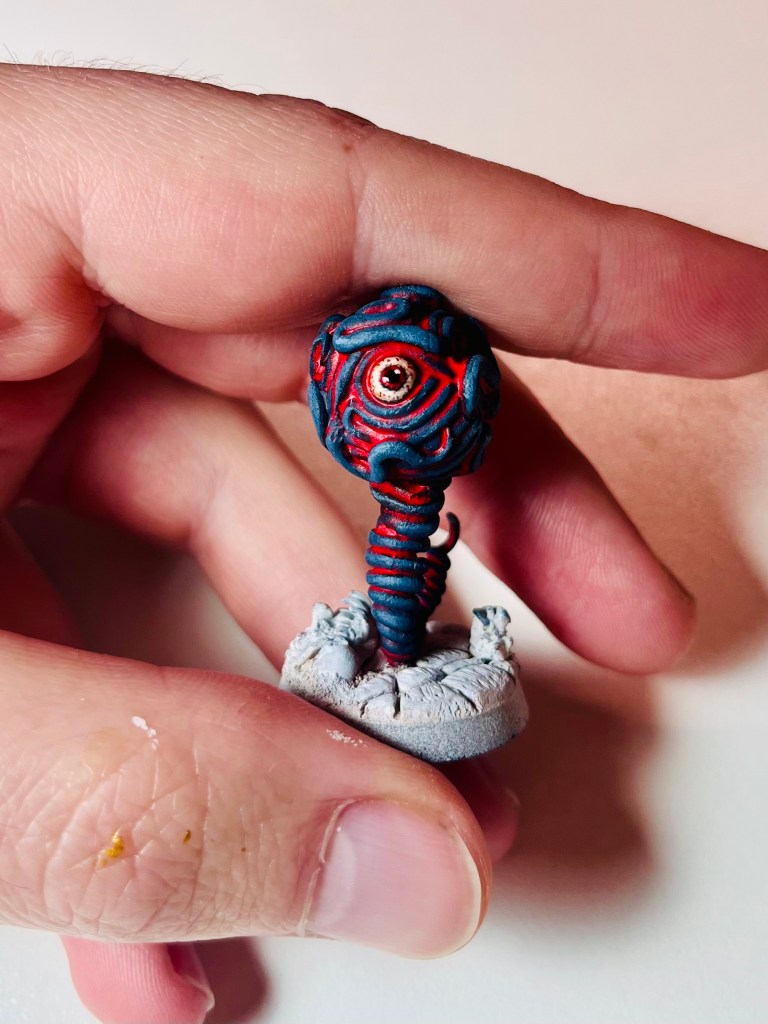
Have the (slightly edited) image of my Glue-NPC, taken from the very talented Frank Scacalossi – on his website you can find a whole collection of amazing character tokens: youseethis.blog/tokens/
Let’s see if this NPC will be the magnet for that epic narrative for the coming years. For all I know, pure chance won’t be.



 Grob's Grotto