Tag: painting

  • Mad Lich and the Gang – a Necropolis28 Gathering (2/2)

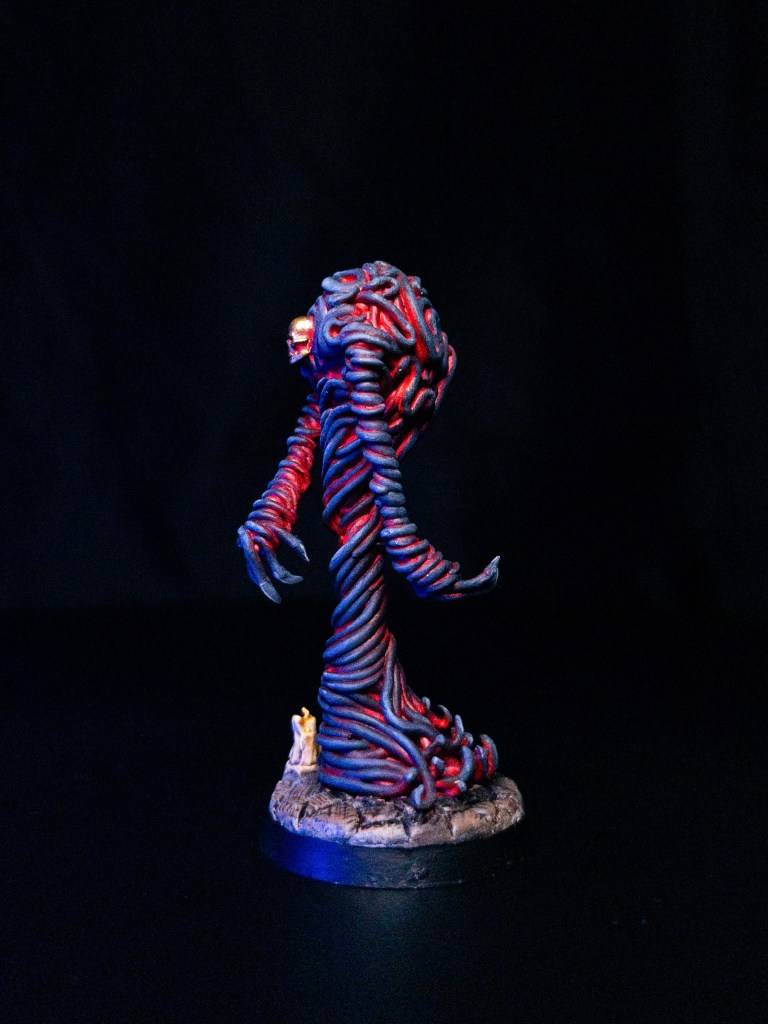
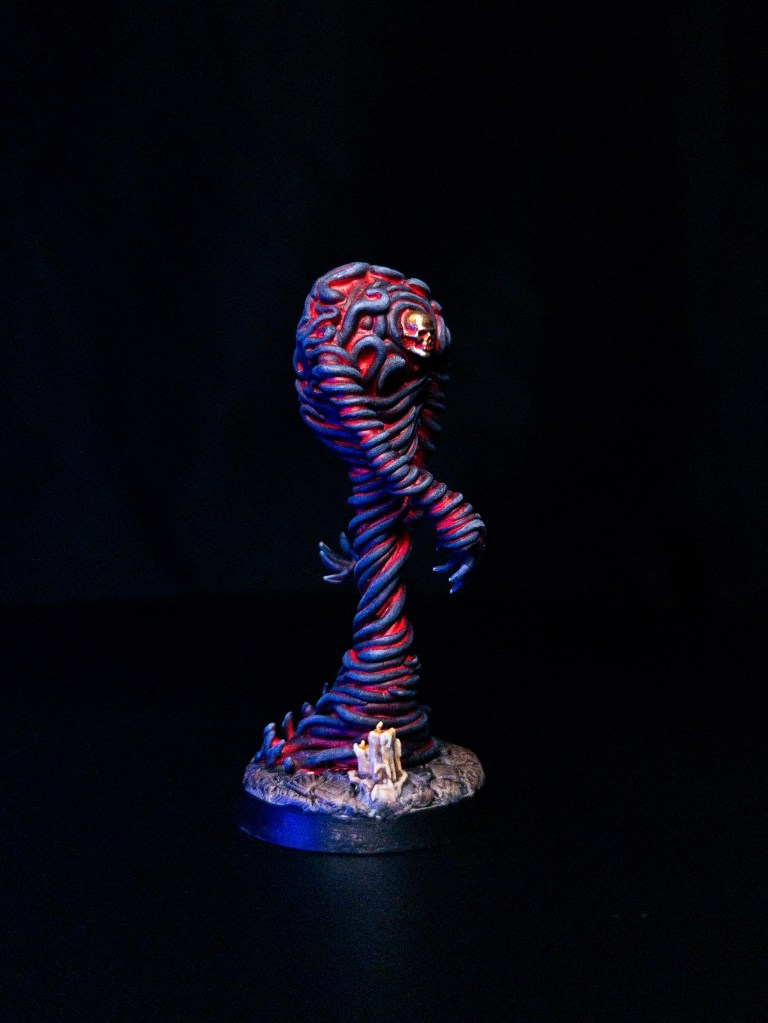
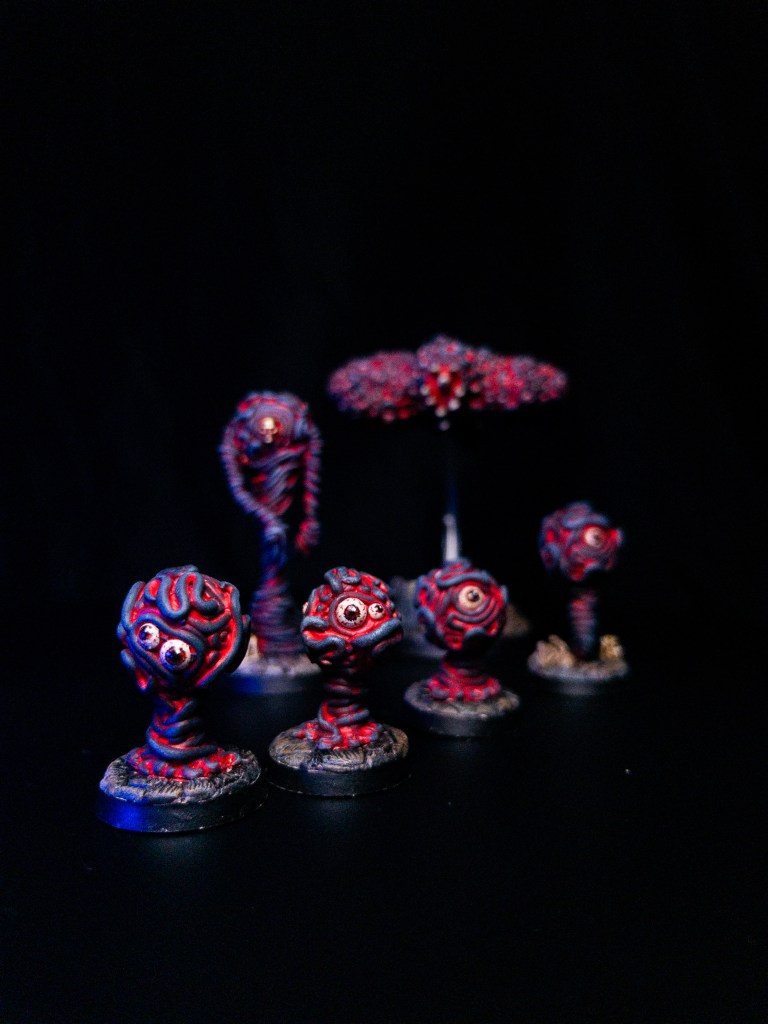
    We return to the tentacle boys and their ghostly shenanigans. This time the gang is completely assembled, bases are decorated. One could say they are primed, moisturised, hydrated, in their lane, ready to bring destruction to their undead foes.

    For completeness’ sake, all the bases I also sculpted with Milliput and a cobble stone roller a dear friend of mine printed for me. The initial look was too “flat”, so I added more structure and dents on each cobble stone with my hobby-knife. Once the bases were cured, I also destroyed some of the cobble stones, and added random resin bits – the usual stuff: candles and skulls and candles on skulls. And fine sand, representing dust. A lot of dust.

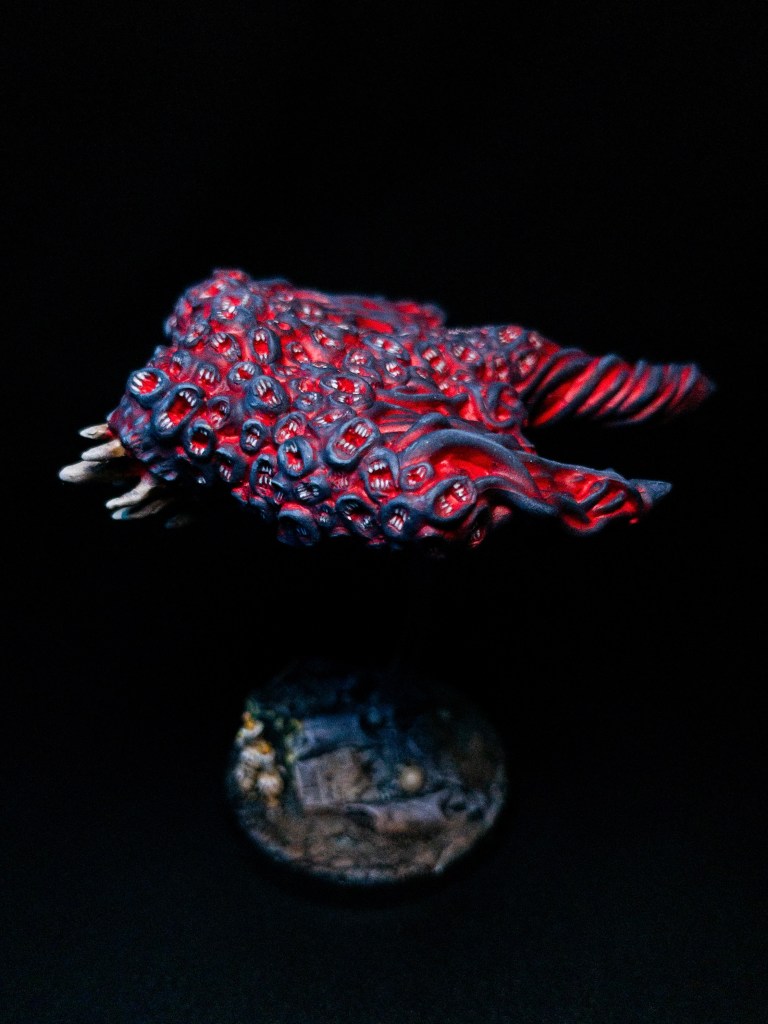
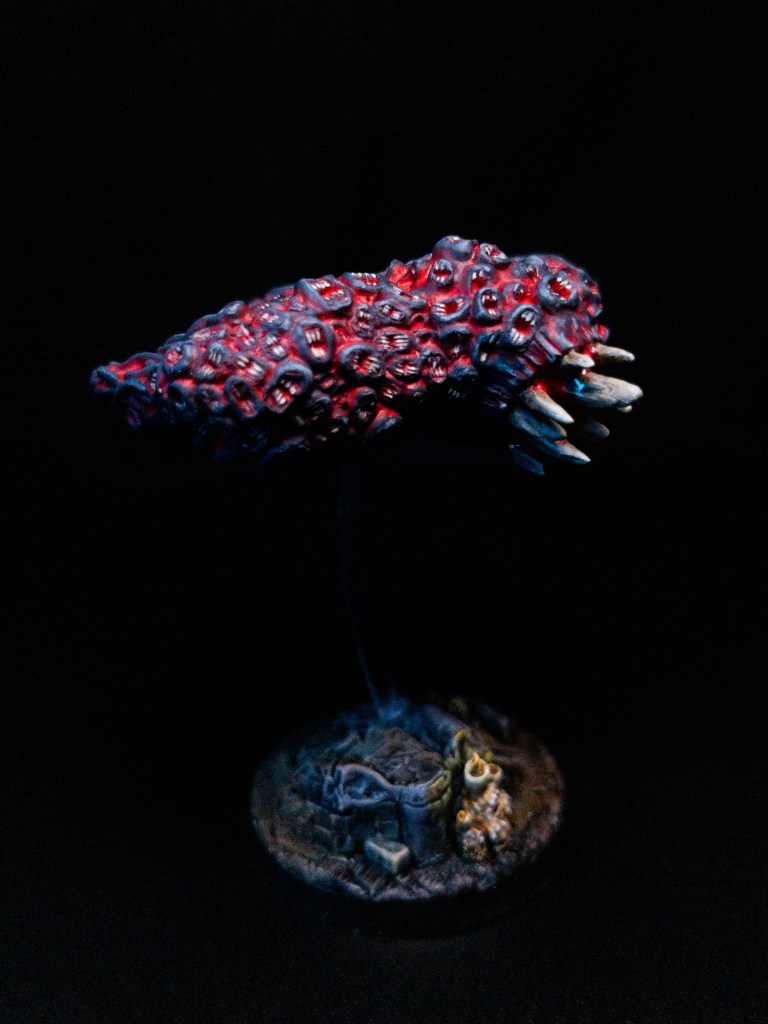
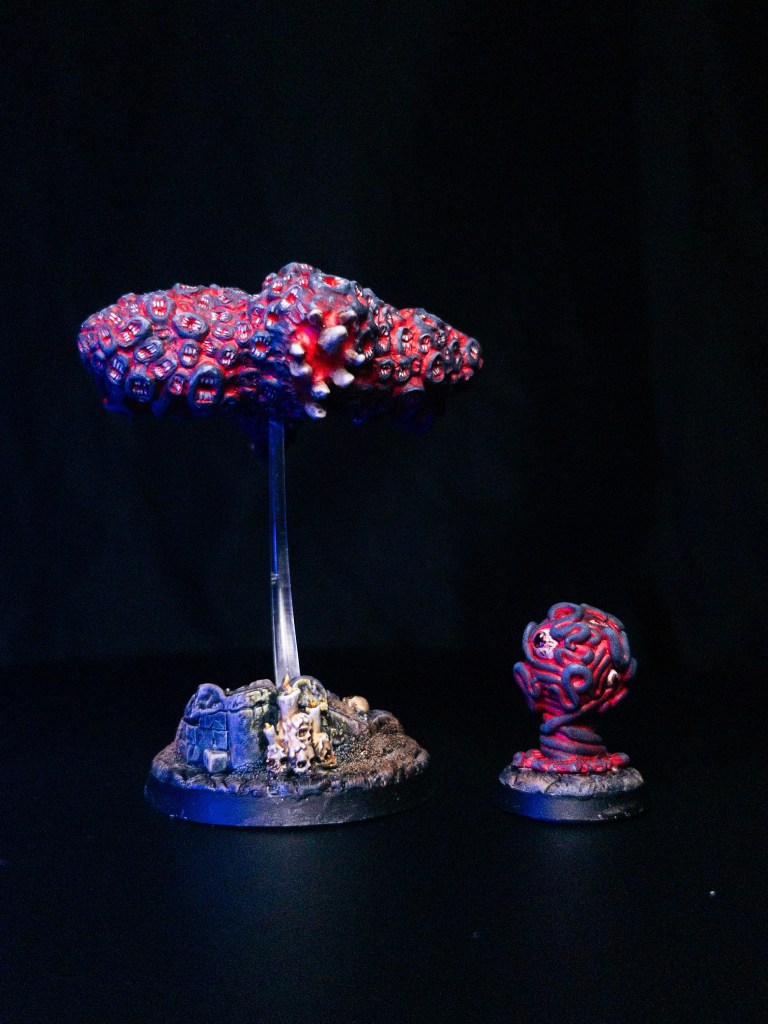
    Once I was happy with the bases, I glued on the models. The big screamer on its flying stand was the most complicated to attach to the base. To avoid priming or painting over the transparent stick holding the monster up, I covered it with liquid silicone. This could be easily peeled off again, once the paint job was finished.

    All models were primed fully white – no zenithal shenanigans, and you will see in a minute why. Let’s bask in their “before picture” for a second.
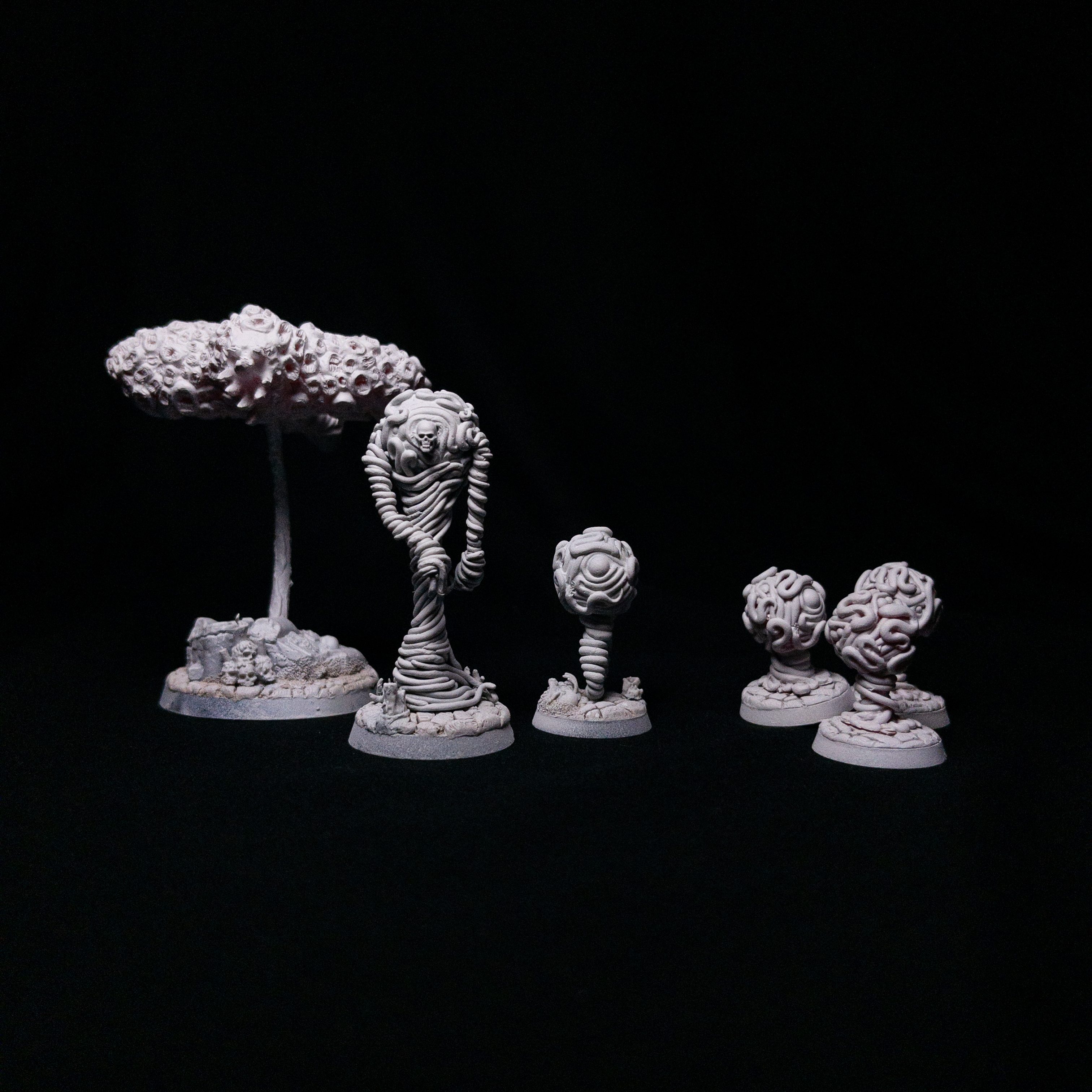
    I still plan on expanding the gathering. Maybe add a Revenant that really looks distinct from the other models, but for now I think the selection I have should be sufficient for starter lists.

    Husk bombardment incoming, dear opponents.

    The painting plan was pretty simple – to convey the other-worldly, eldritch horror, they needed to glow. Of course. Which means we are going for a light-to-dark-to-light paint job. This is totally an actual art term, if you ask me.

    The colours I used were only five (all Army Painter):

    • Power Node Glow
    • Vermillion Red
    • Matte Black
    • The Darkness
    • Ivory White

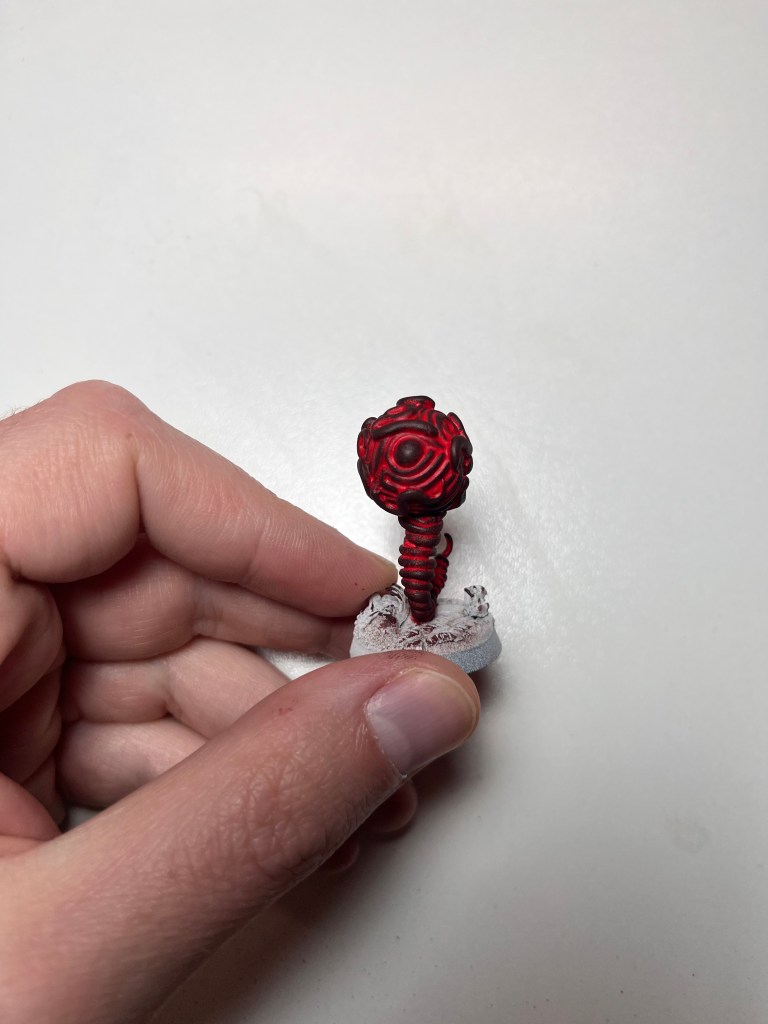
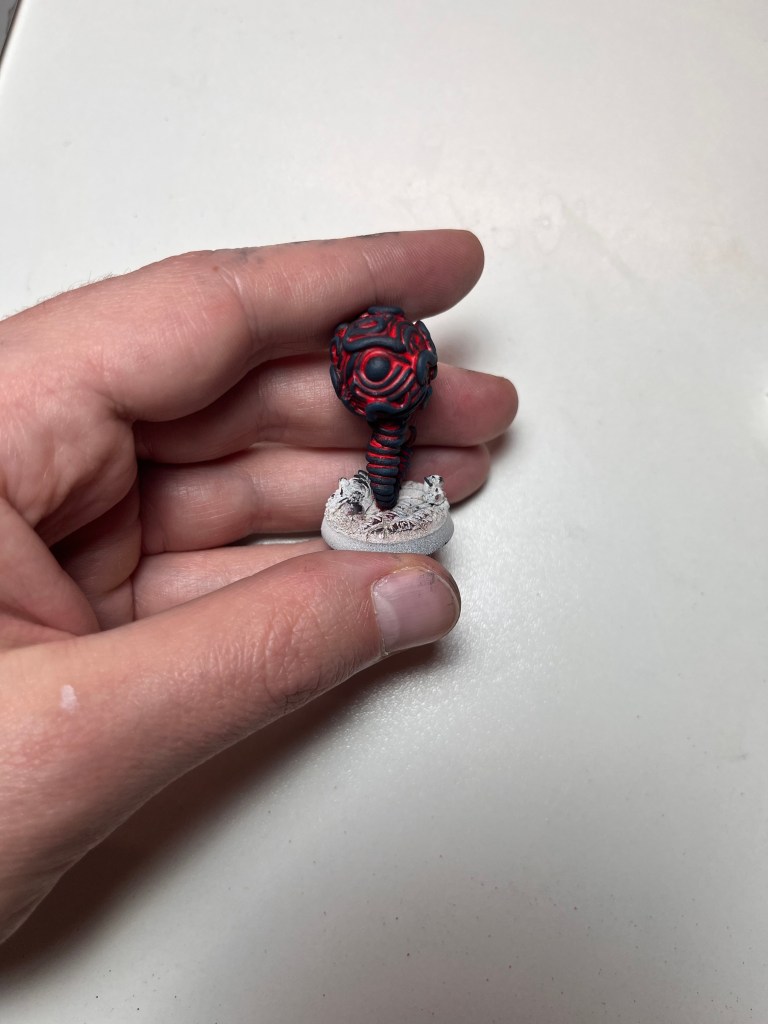
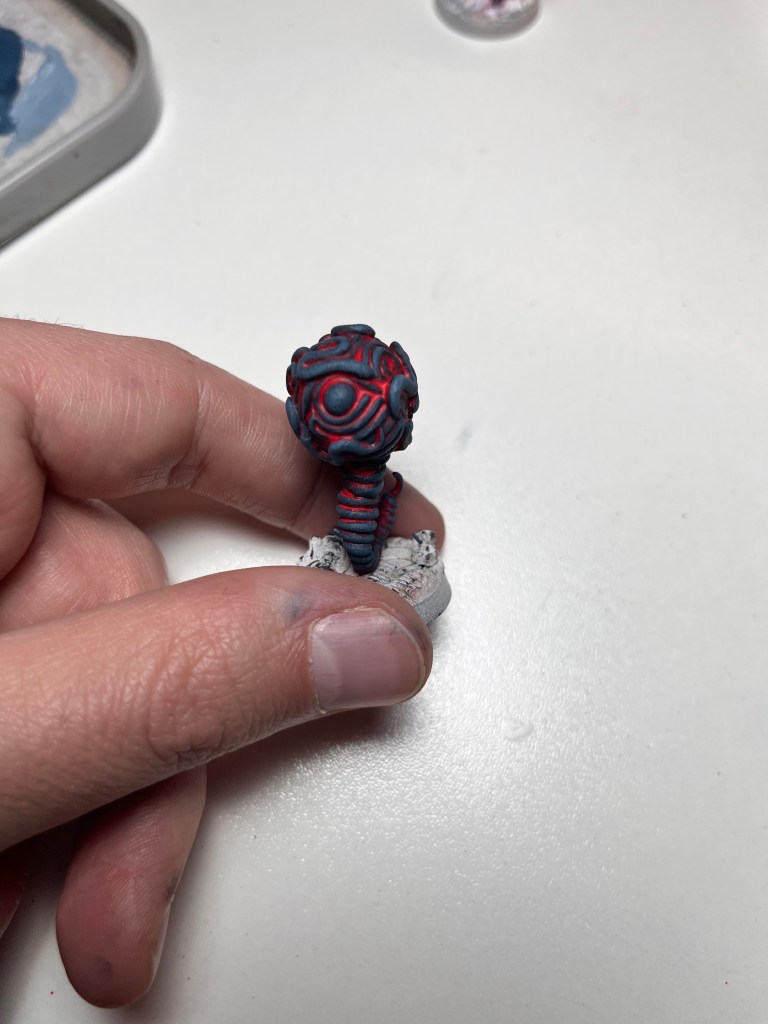
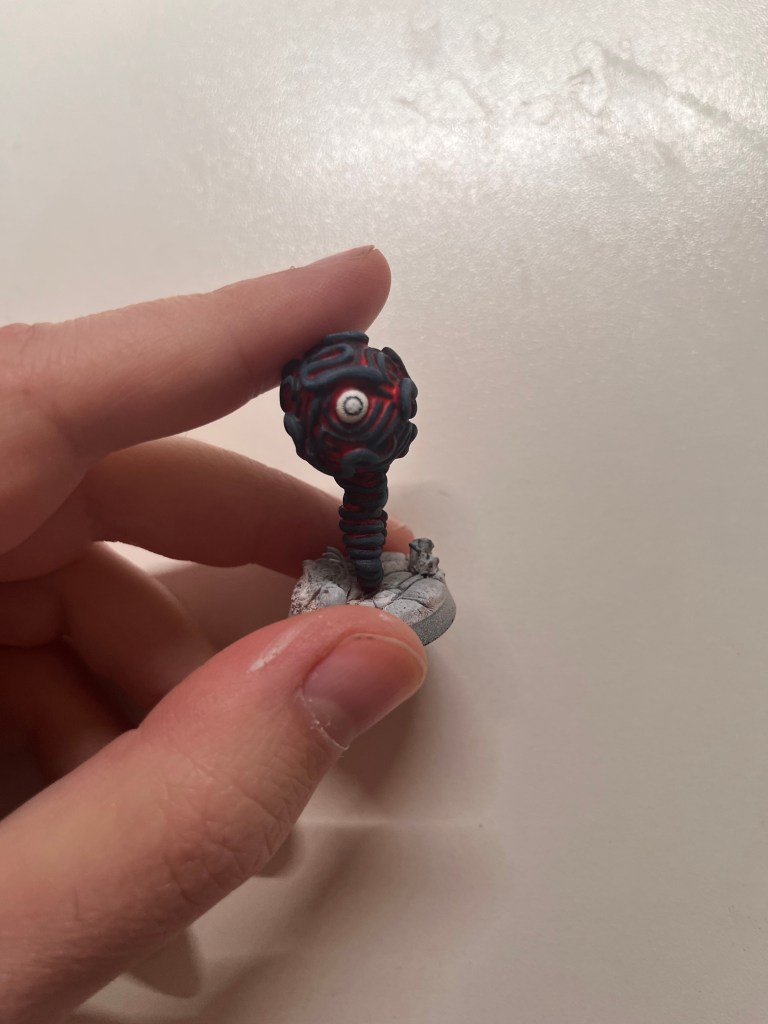
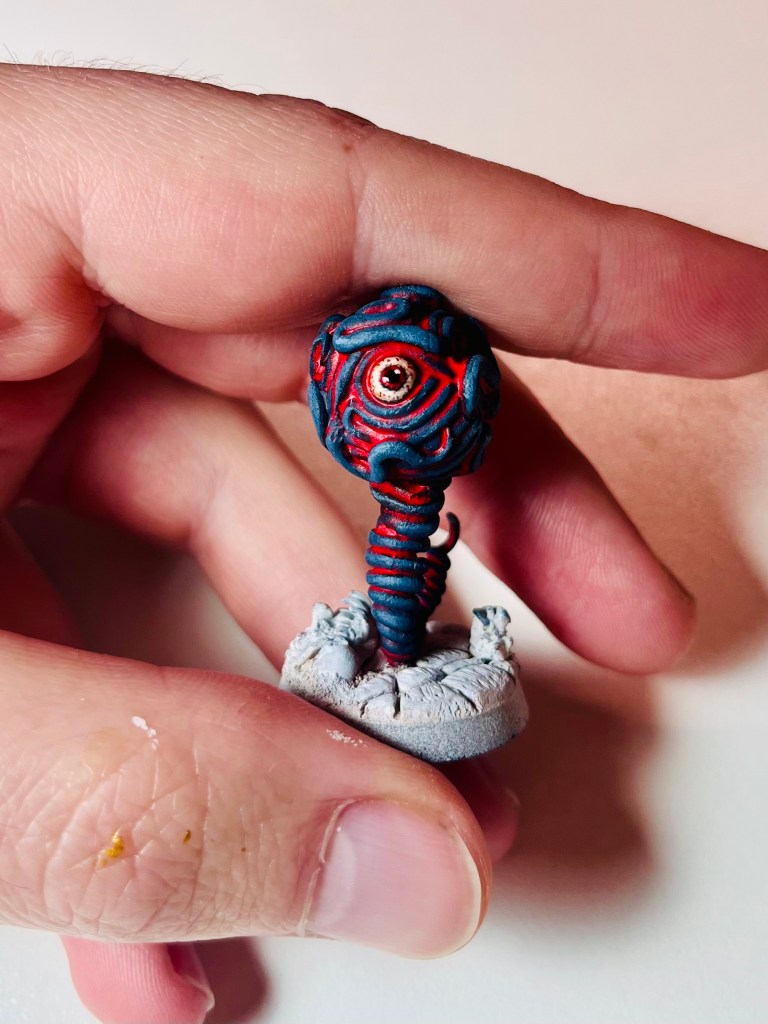
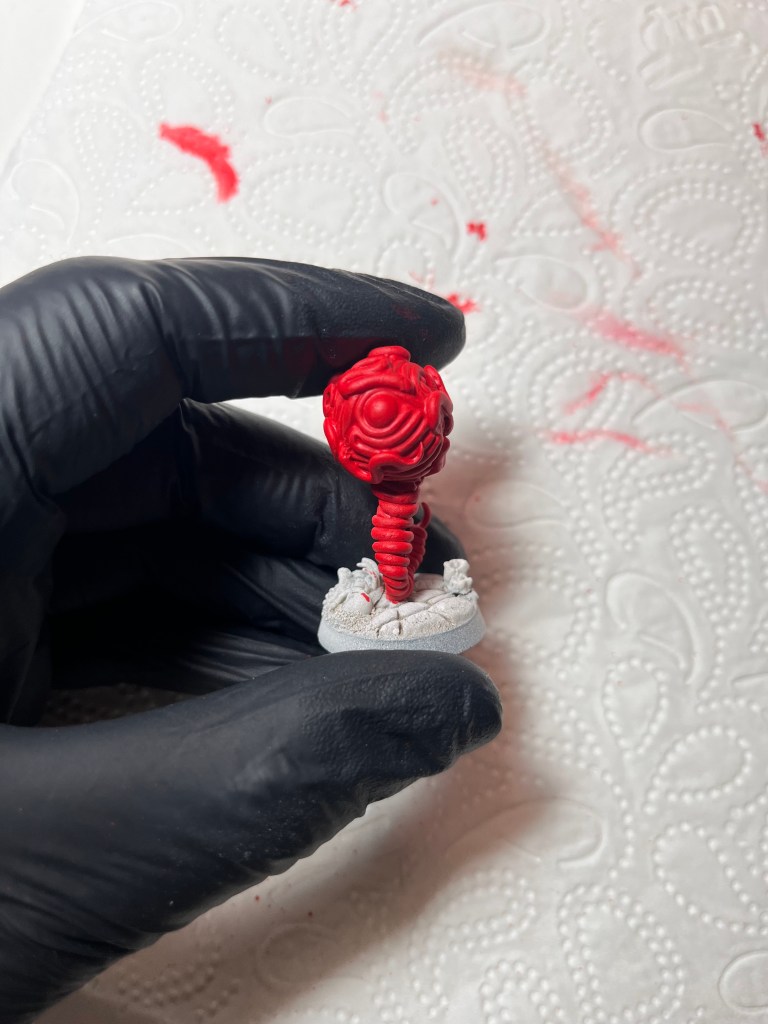
    The main goal was to have a complementary effect of the blueish black of the The Darkness with the very bright red (almost magenta-pink) in the recesses between the tentacles. As a thematic contrast, all the eyes would then be painted with actual fleshy colours. The base layer was a mix of Power Node Glow with just a tiny bit of Vermillion Red, followed by dry brushing the model while adding Matte Black to the bright red paint until I dry brushed it with pure black. Then I started with The Darkness, and added with 2 more steps more Ivory White to it. At the end I gave the models even some light edge highlights with a very desaturated light blue. See the step-by-step on this little familiar:
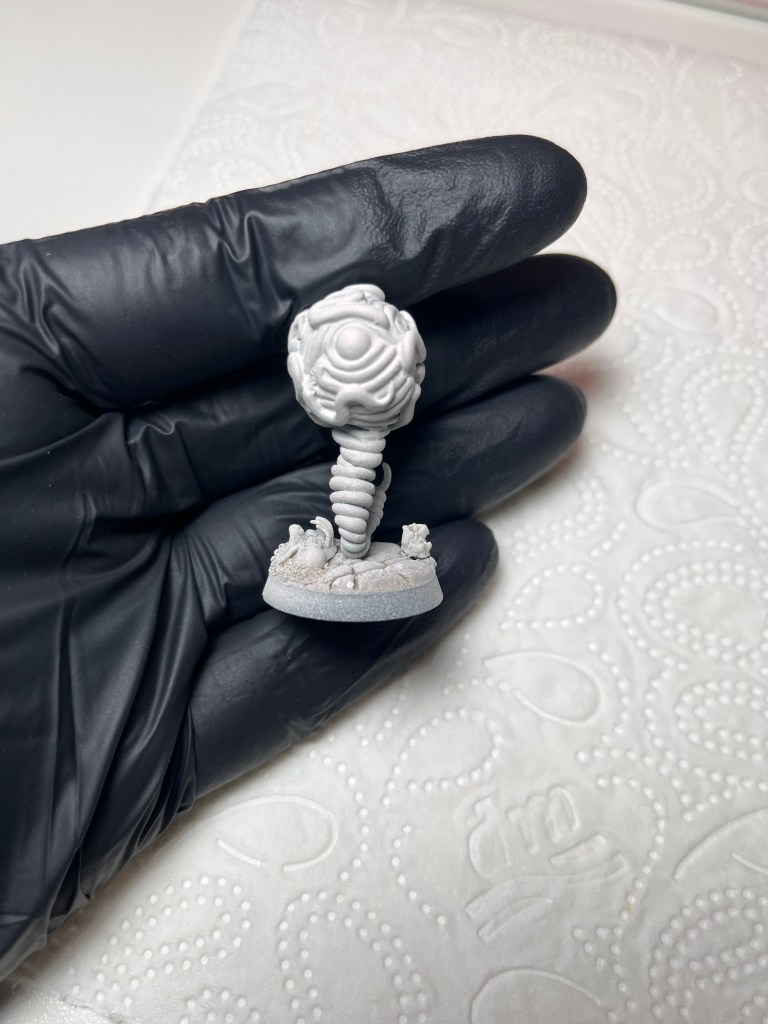
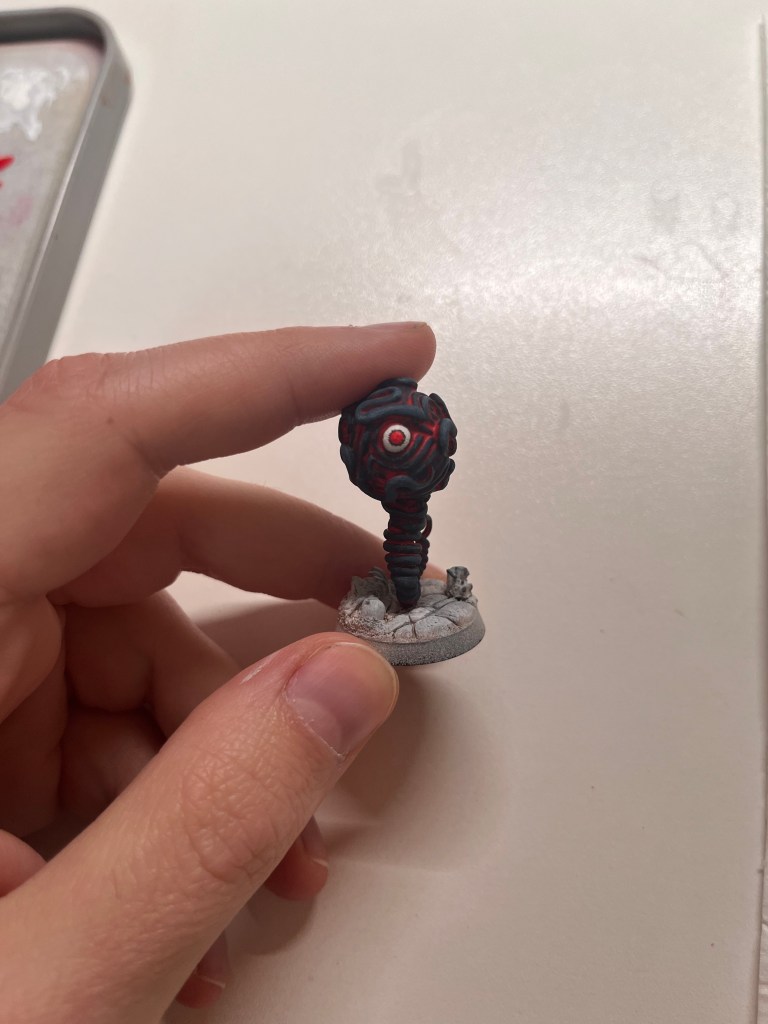
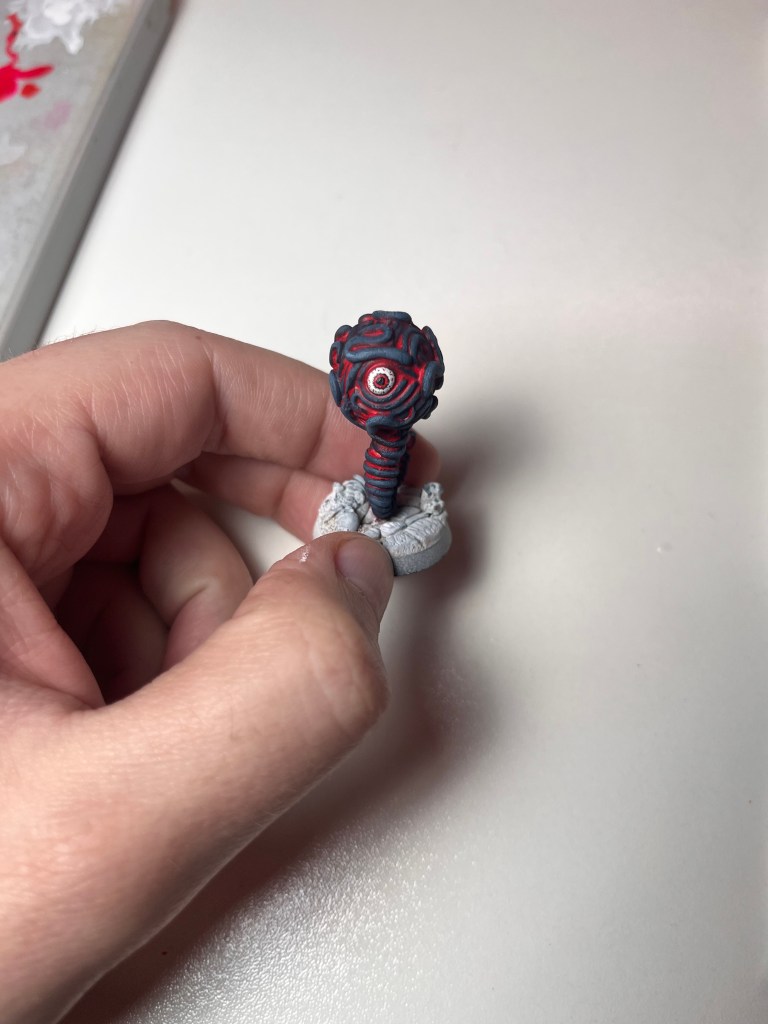
    I was asked how I did the eyes, and the photos show, it couldn’t be simpler. Base coating the eye ball white, then adding a circle with The Darkness, followed by another, smaller white circle within (to have a light undercoat for the Vermillion Red), followed by another smaller black circle. At the end I added one white dot in the corner of the pupil, to simulate a wet and glossy effect. With a super thin brush (I use a cheap nail art brush) I added some random red streaks that should represent blood vessels in the eye ball. Once done, I drenched the eye in gloss varnish and Mod Podge.

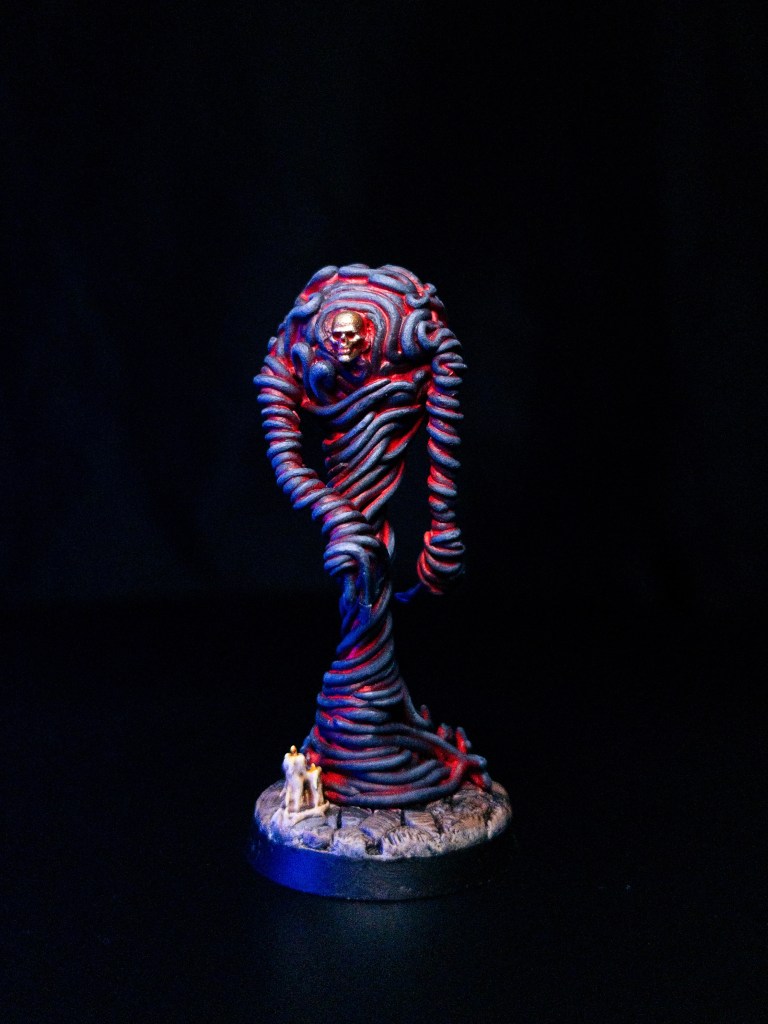
    The Lich had two extras: claws and as the only model in the Gathering an actual skull. These needed to be highlighted somehow, and for the claws I decided that I would drive the highlights to an extreme, light blue to pure ivory white, while the skull would get a gold treatment – to really shine visibly and bright from the dark backdrop of the tentacles.

    The colossal monster was the most fun but also the most tedious to paint. The mouths would not have the desired effect if one would just drybrush over the teeth. Hence, I highlighted the teeth individually, to an almost matte white. It took ages, but I love the result.

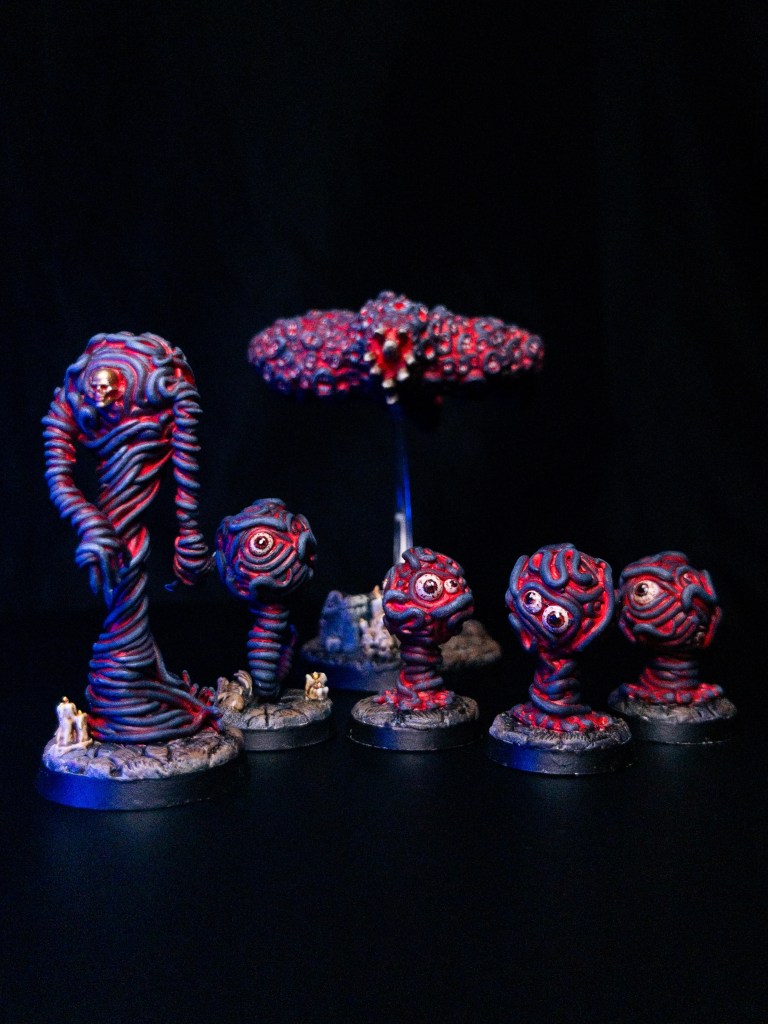
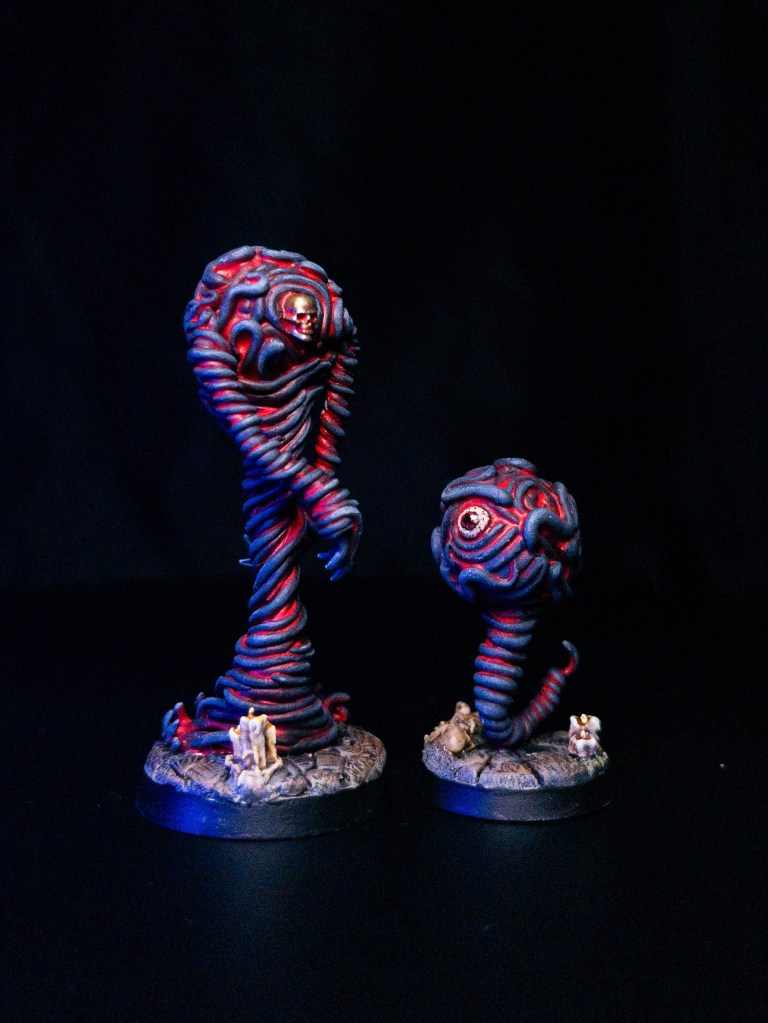
    And with the black base rim, some dry brushing of the bases and some very light OSL, I called this project done for now, and present you the finished Mad Lich and the Gang. At some point, I will write up some lore on this Gathering. For now, have some photos.
  • Blanche who?

    I am far from someone who likes to bash Games Workshop. The worlds, games and stories created by the company are the gateway drug for probably 99% of all hobbyists, and even today, where my playtime of GW-related games can be measured in hours per year, I dislike the hate that I sometimes see. At the end of the day we are all just pushing war-dollies around. Play Warhammer, however you want. A company is not your mum. If you are cheeky, play your Old World Army with OPR.

    Now, getting to my point: I fully understand that Games Workshop today is a company worth 6.5 billion pounds, and I understand that Warhammer has become the consumer-facing brand and IP of said company. It’s converting new and old players alike and selling them plastic kits at a faster rate than can ever be played or assembled, let alone painted – despite understanding all of this: I really struggle with how GW treats its artistic roots and history.

    For the sheer fun of it, I bought the recent “50-Years Games Workshop” White Dwarf 518. It is a light read on the history of the company and its development across half a century. Surprisingly, it’s actually quite open about its DIY and punk roots, inspired by the Zeitgeist of Britain during that time. It does very much focus on the “commercial development” of the company, probably more than anything. Then you get to the art page-spread, showcasing artworks that shaped the imagination of entire generations of Warhammer fans.

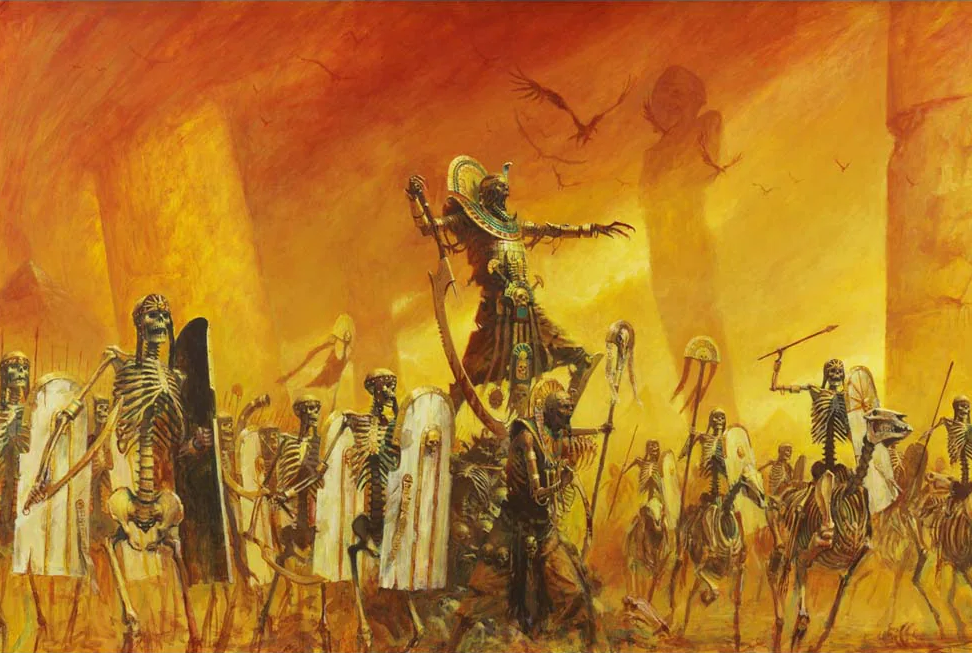
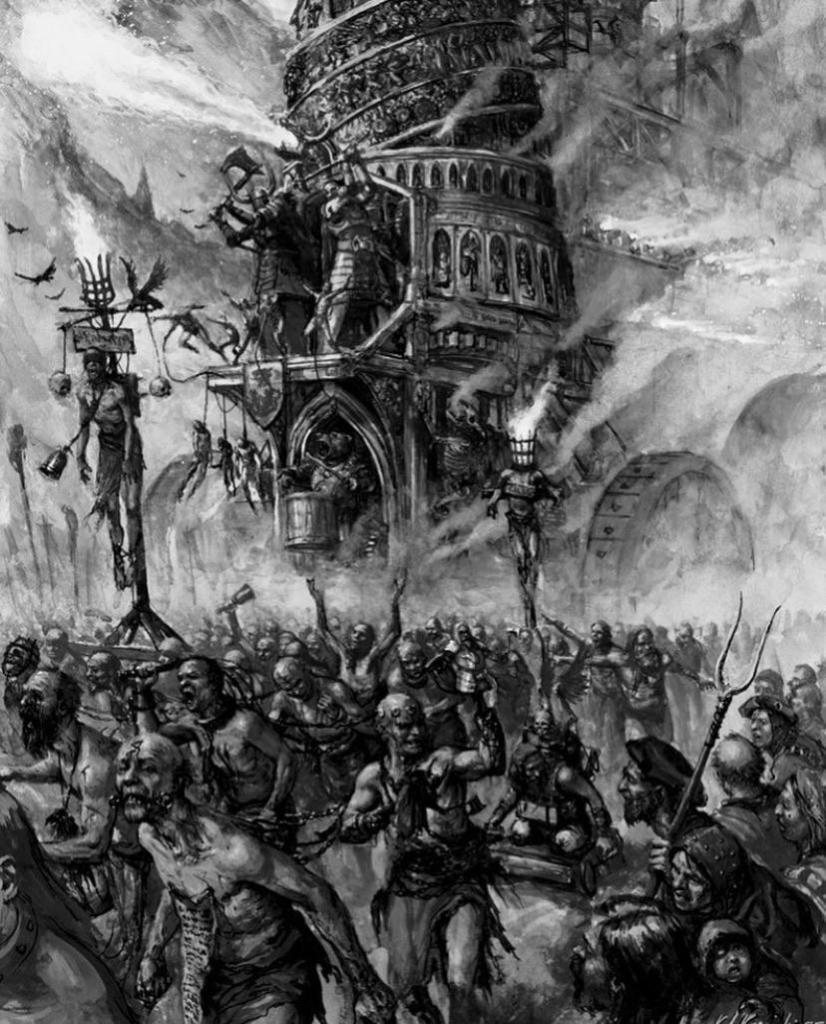
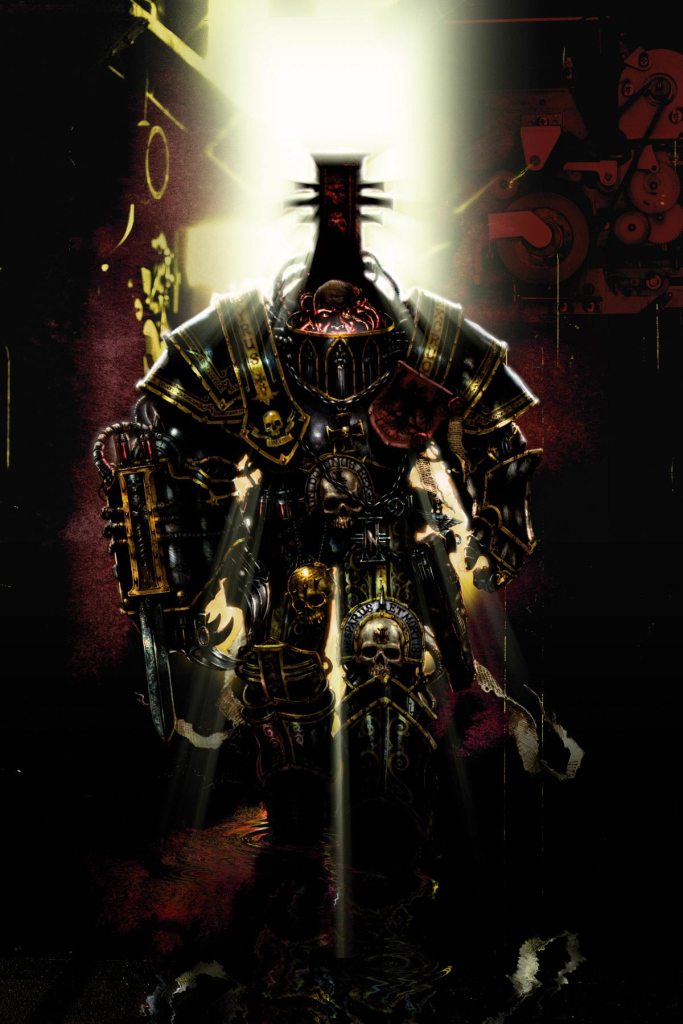
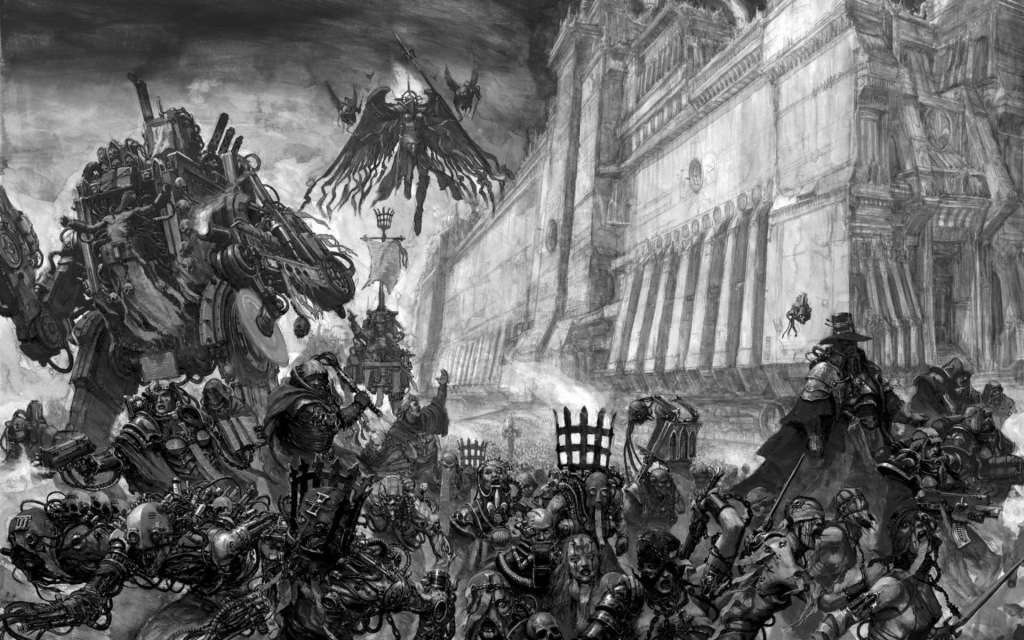
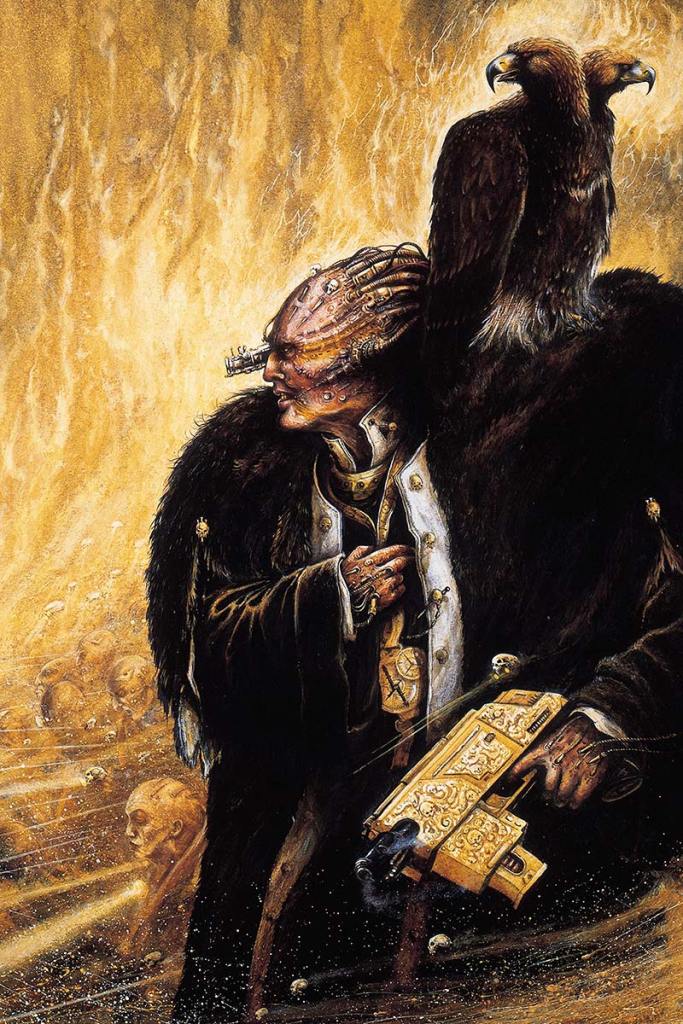
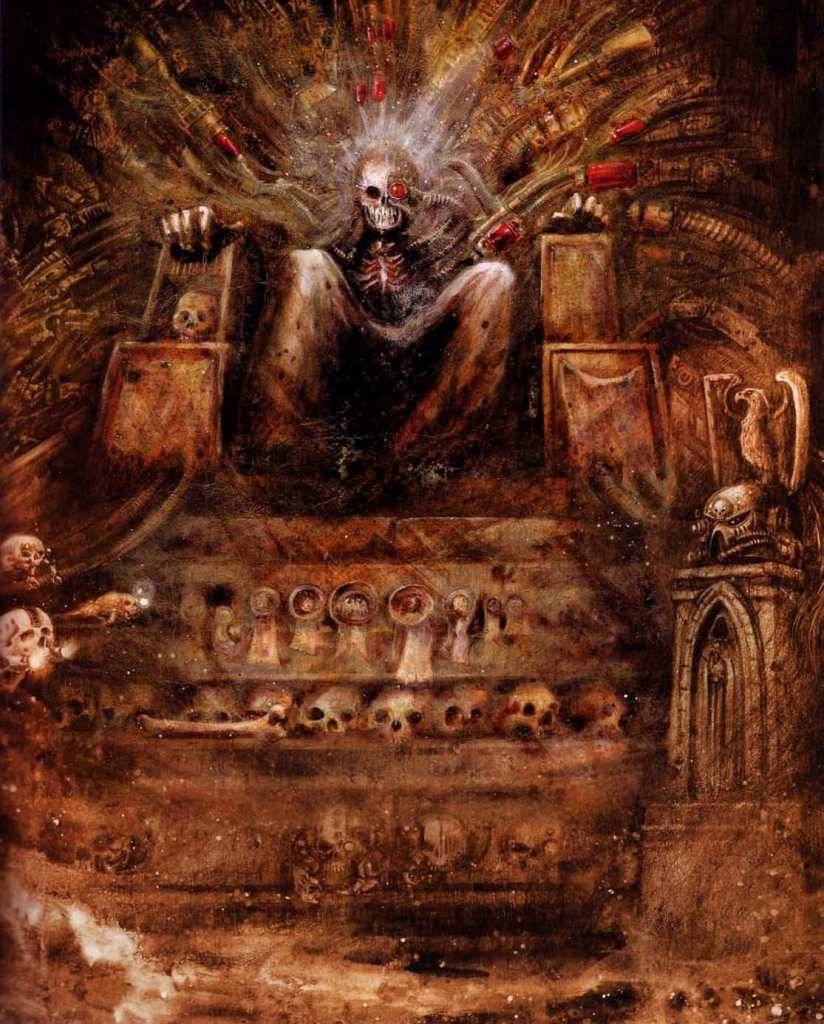
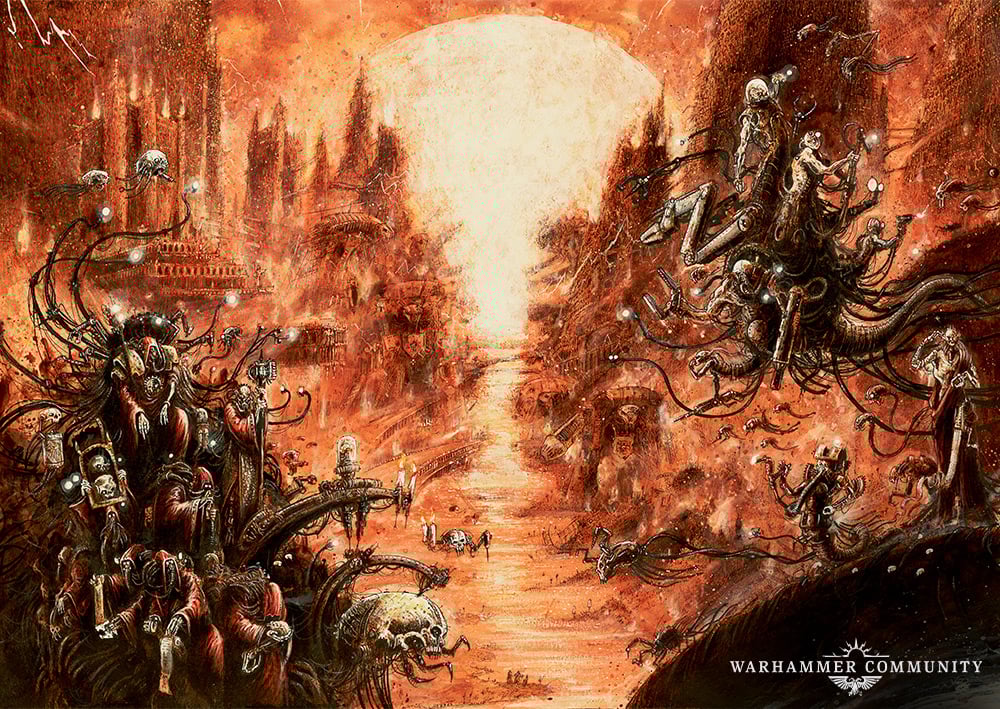
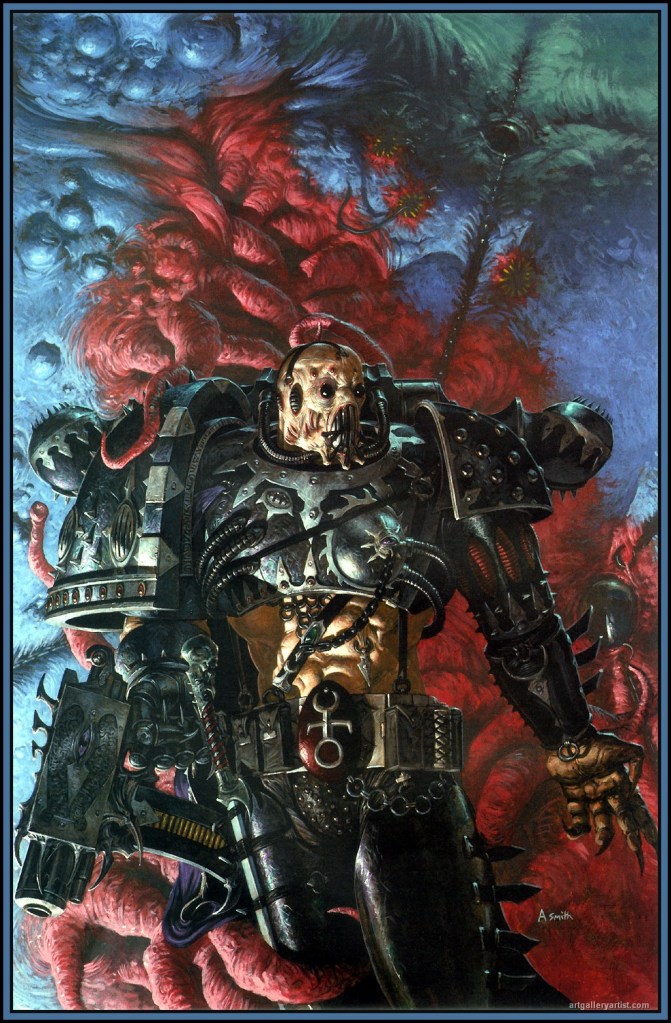
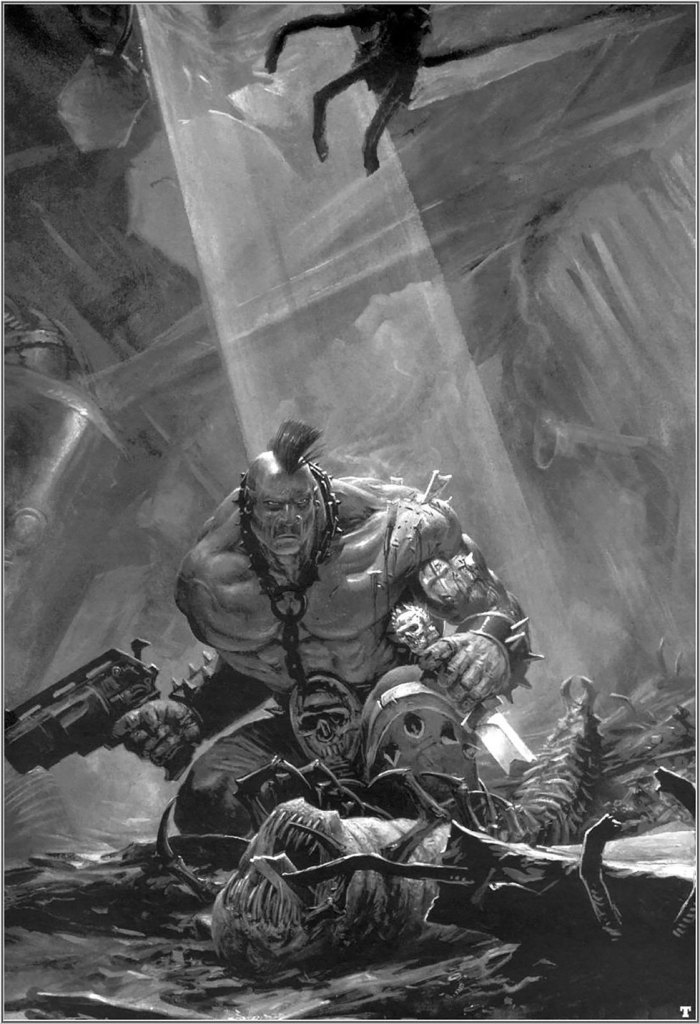
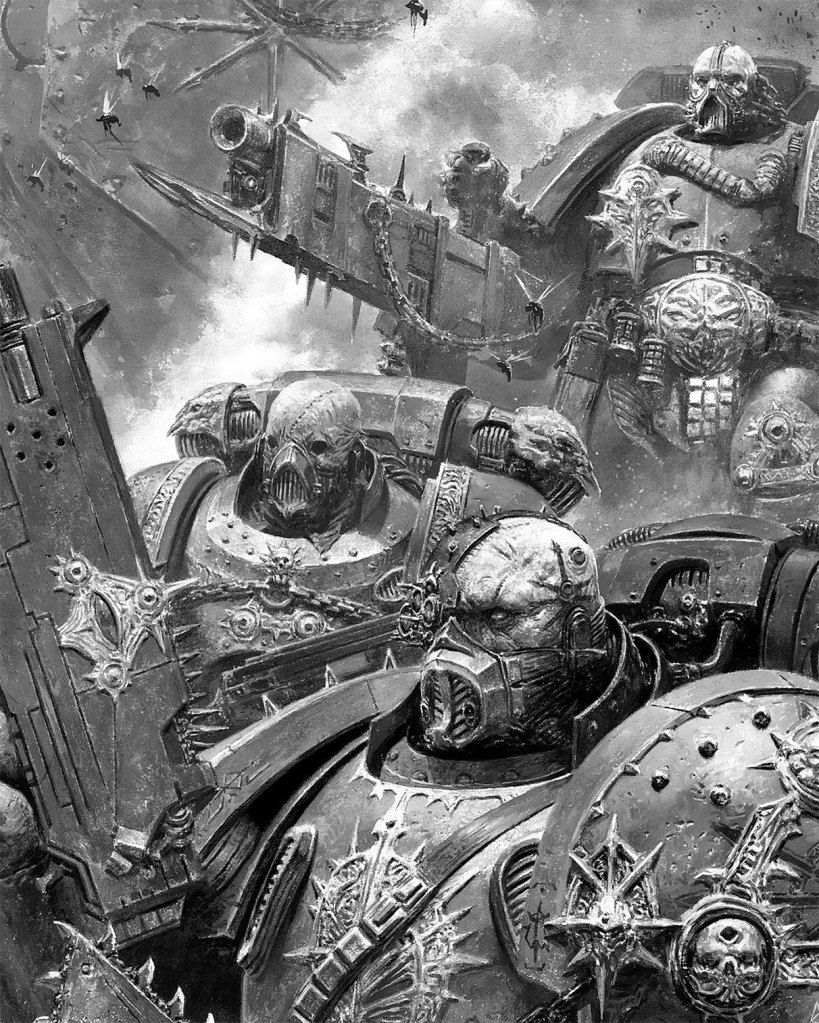
    Two artists from GW talk about the style of Warhammer art, and how it is a mix of genres inspired by some old masters like Bosch or Dürer, followed by jokingly suggesting to look them up. In good White Dwarf fashion it’s a loose conversation with “Alex” and “Paul” – we have to assume it’s Alex Boyd and Paul Dainton. Then you look at the images. Not a single name mentioned in the image captions. You actually see works by Adrian Smith, John Sibbick, John Blanche, Paul Dainton and Alex Boyd. Most hobbyists who have been around since the 80s, 90s or 00s would most likely know, but it can be assumed that a big chunk of the White Dwarf audience is of a younger age and not familiar with the history you are just trying to present.

    Let me be clear: in a 4-page article that is part of a 27-page history lesson on GW, to not even drop a single artist name when showcasing their art is atrocious. John Blanche was 46 (!) years of those 50 employed at GW, in various functions. A very specific group of artists has shaped how Warhammer looks and feels like, which in turn has had ripple effects in the general perception of how fantasy or dark and grim sci-fi can look like. And GW can’t be bothered to even mention one by their full name and give them credit right under their artwork.

    Before anyone gets technical with me about contracts and IP-rights: to contrast this with something else, I opened this week the fresh-off-the-press Trench Crusade rulebook.

    Without a doubt – the artwork in that rule book is absolutely outstanding. It really paints a horribly dark and gloomy picture of the world. Each artwork can be an inspiration by itself for some deranged, cursed kitbash or paintjob.

    You open page 1 – and every single person working on this book is listed, including every single artist who contributed art. With designated initials, that can be found directly on their respective artworks within the book.

    It is kind of ironic that the Trench Crusade rulebook is even dedicated to – John Blanche (among others). Almost as ironic as Army Painter grabbing Blanche as a brand name to release 2 paint sets, with Citadel sleeping on this golden opportunity and still releasing paint in pots in 2025. But I digress.

    I don’t want to rant, even though it does sound like it, but instead end this blog post on a positive note. Art published within the White Dwarf or other GW books has shaped my own imagination, in the same profound way as for example the Lord of the Rings novels did when I read them as a child. This is thanks to the platform Games Workshop gave artists, whose works I love and cherish to this day. And even if GW drops the ball on celebrating this, at least I can share in my little corner art that has altered my brain chemistry.

    Enjoy this personal and curated selection.

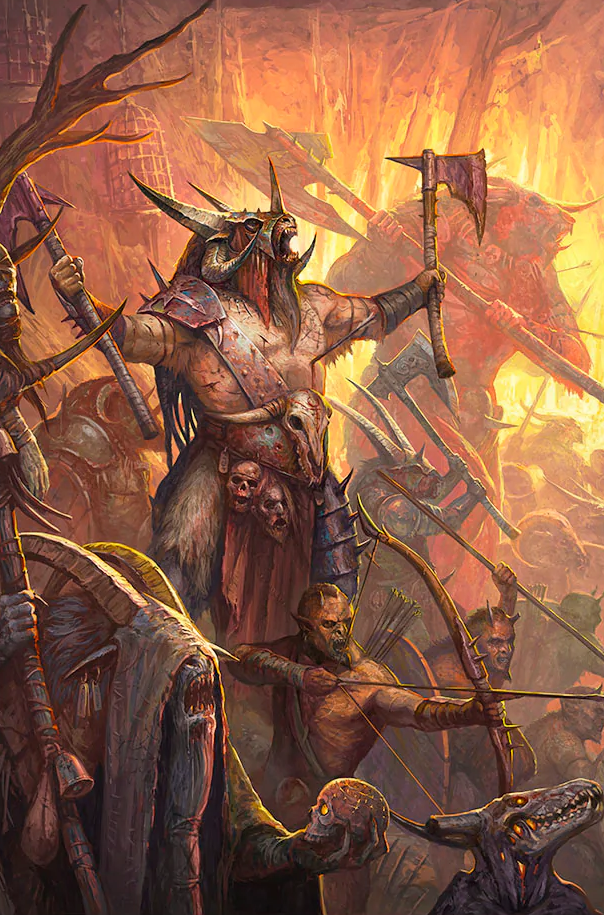
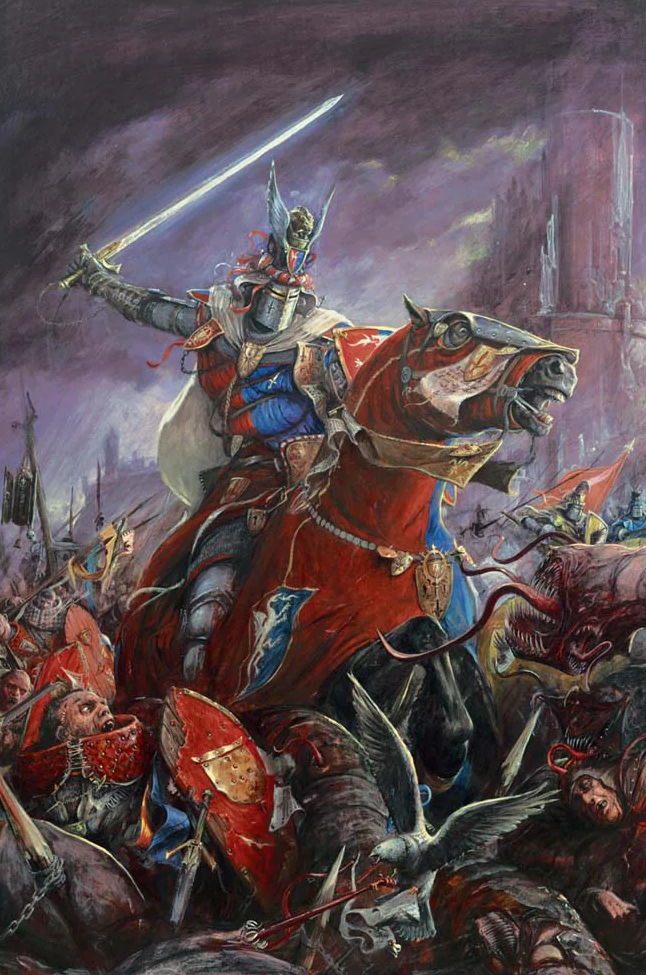
    Paul Dainton:

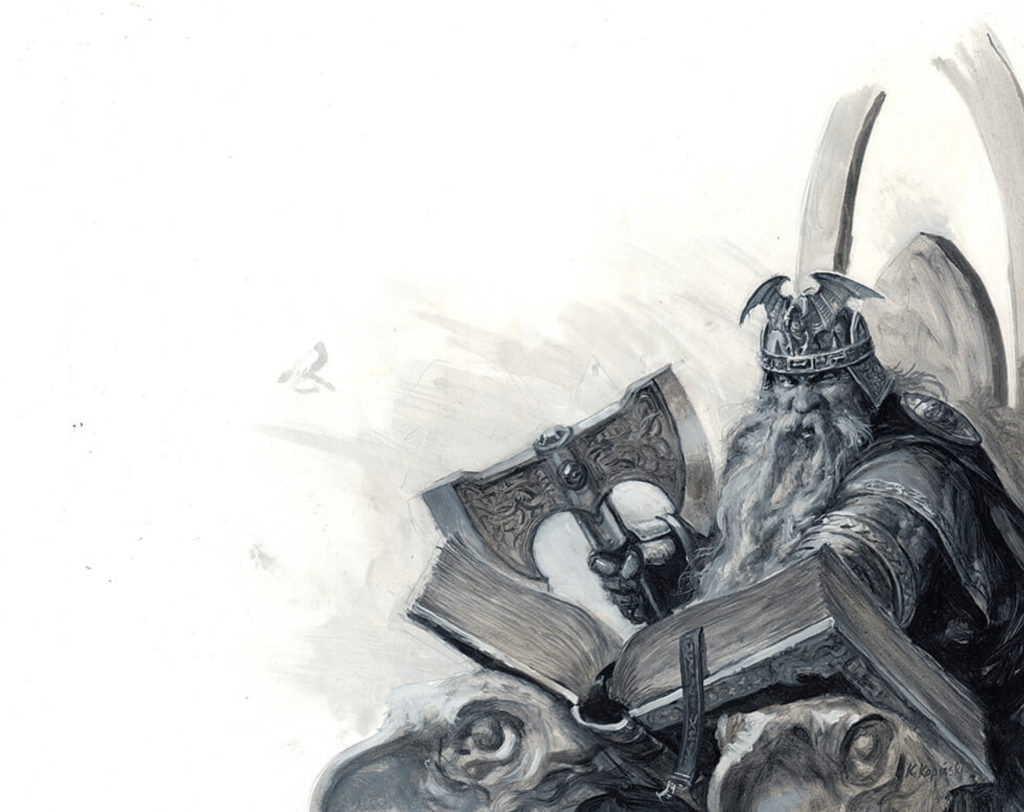
    Karl Kopinski:

    Alex Boyd:

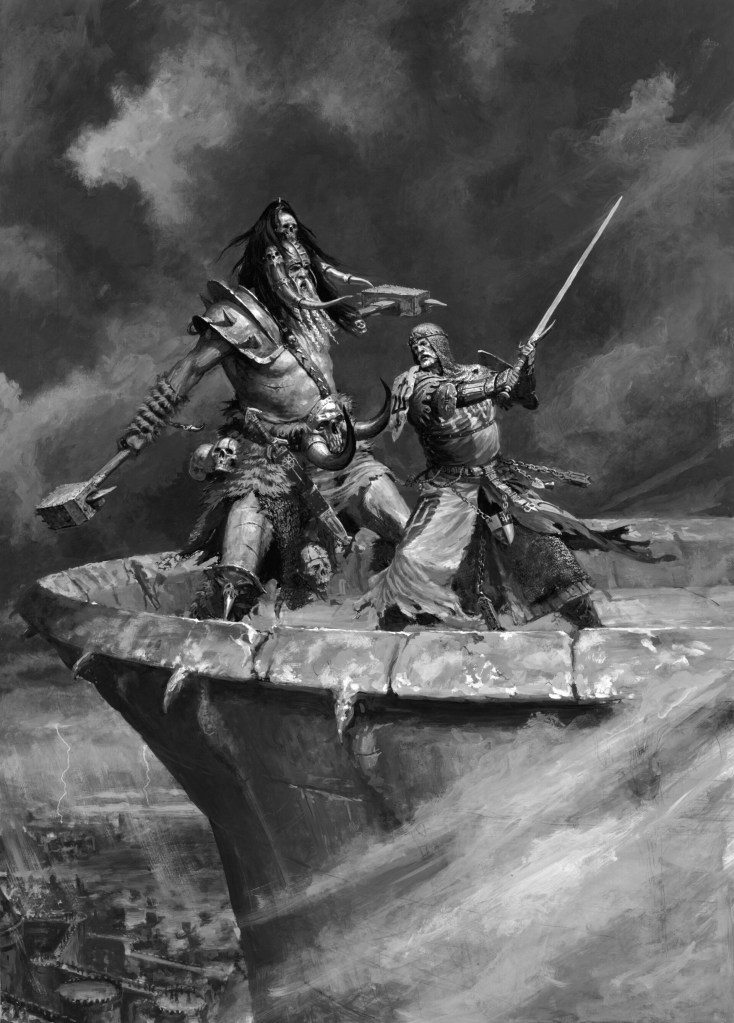
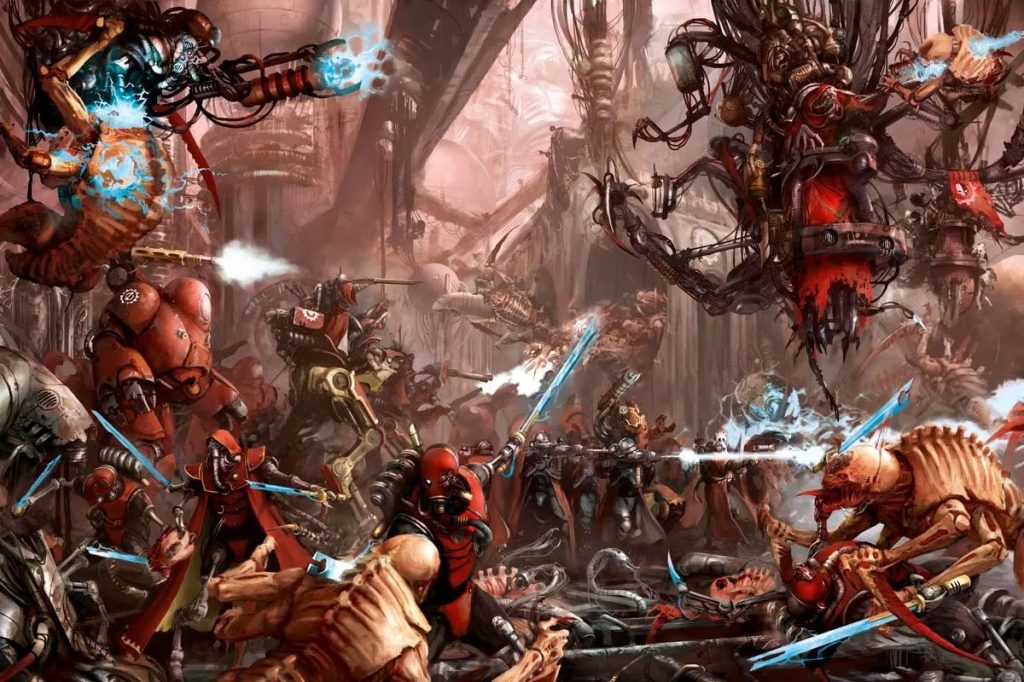
    John Blanche:

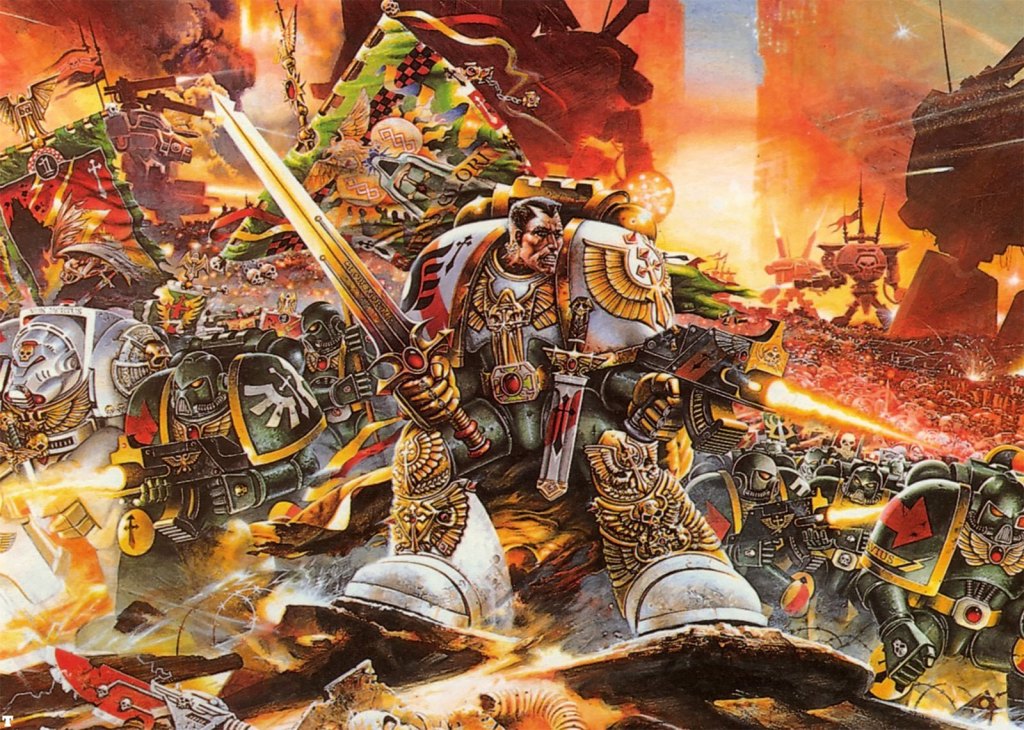
    Adrian Smith: